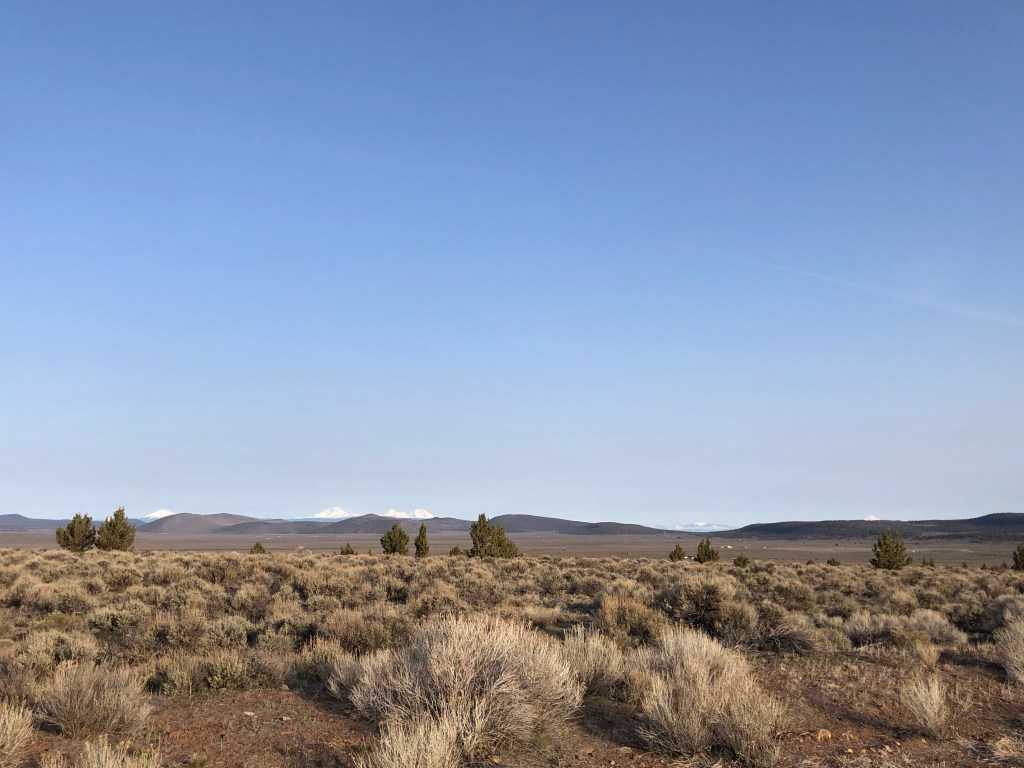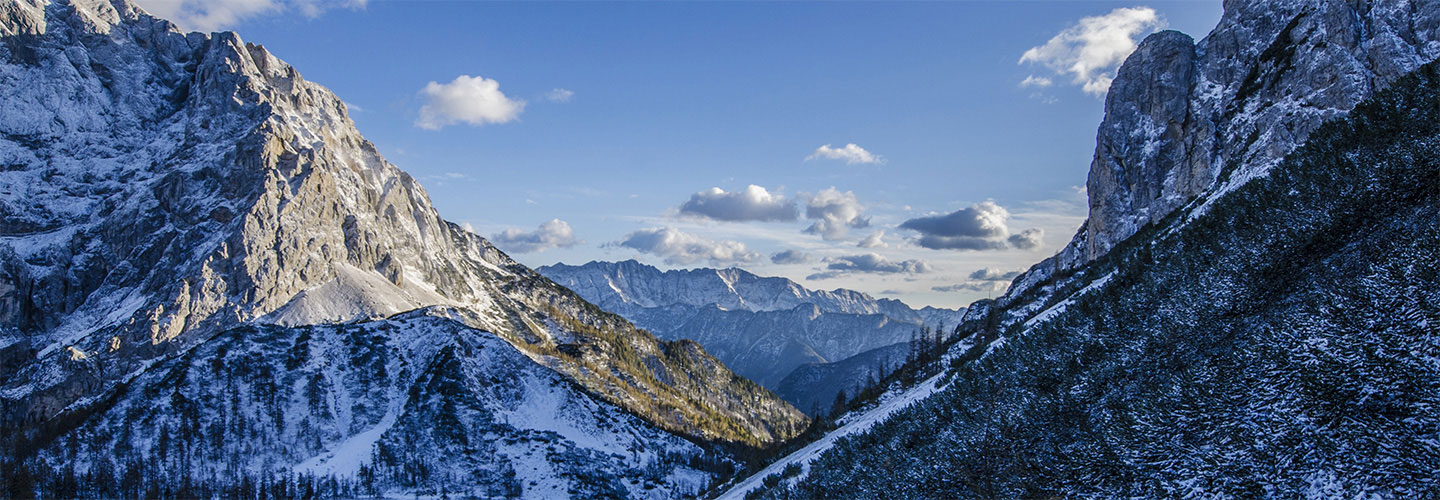
I’m planning to explore central Oregon more in the coming months and took a short overnighter down to the Pine Mountain Observatory east of Bend, Oregon. The past few weeks have been shoulder season weather in the PNW – rain in the valley and snow in the passes. Once you pass the Cascade crest that runs north/south in Oregon, the landscape changes dramatically to open range and a much drier (and browner) environment. If there were cholla sprinkled around I would think I was back in New Mexico.
A friend who grew up in New Mexico, but lived in the Pacific Northwest for a short time told me the thing that bothered him the most about the PNW was he couldn’t match direction to compass – in New Mexico the Sandia mountains are always East, Rio Rancho and the desert is West, Santa Fe north and Socorro South. You can look with your own eyes and know where you were – there’s something to be said about being able to always see the horizon. (“Stand in the place where you are – now face north…” / REM)
Wallace Stegner wrote about the brown landscape of the West. Most people think beauty is lush green forests and waterfalls, but Stegner and even Edward Abbey wrote about the beauty of the arid Western landscape of the US.
One cannot be pessimistic about the West. This is the native home of hope. When it fully learns that cooperation, not rugged individualism, is the quality that most characterizes and preserves it, then it will have achieved itself and outlived its origins. Then it has a chance to create a society to match its scenery.
Wallace Stegner, The Sound of Mountain Water
Maybe the attraction is because the desert is both beautiful and dangerous. It’s a place where life is fragile and has to work harder to thrive. I won’t go into the biblical references to the desert or popular culture references of desert (think Mad Max apocalyptic). Cadillac Desert is a classic book about the history and future of the American West.
The drive from Portland was quick – though when I passed Mt. Hood I was wishing I was climbing high on the mountain in the 60 degree sunshine. I’m sure there was some good climbing and skiing. Once you emerge from the alpine zone and leave the doug firs behind, it’s a quick drive through Warm Springs Indian Reservation and then on to Madras. I’ve always continued to Bend, but Saturday I stayed on Rte. 26 to Prineville, OR. Here the landscape opens up with the Ochoco mountains to the east and the spine of the snow covered Cascade range to the west. Hood, Jefferson, Black Butte, North/Middle/South Sister, Broken Top and Mt. Bachelor – all topped with recent spring snow.
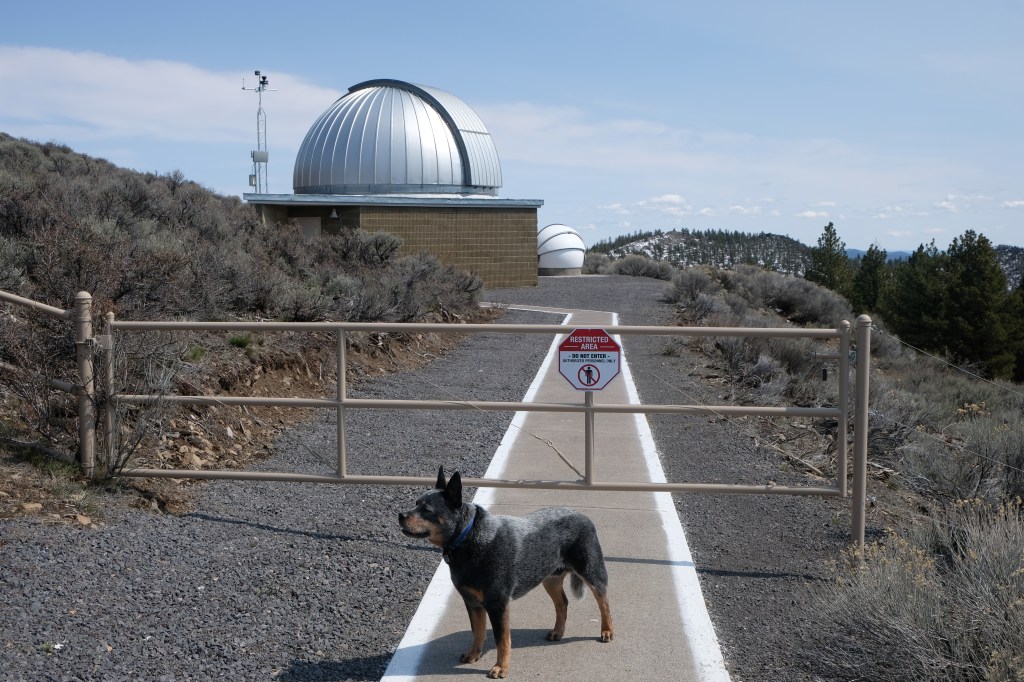
The Observatory is run by the University of Oregon and has maybe 7? telescopes of various sizes. The drive up to the observatory was on a nicely graded gravel road with patches of melting snow. Once I got to the top ~6400 ft in elevation, the north aspects were still snow covered, with the southerly aspects showing a nice forest duff of pine needles. The place had a Flagstaff, AZ vibe, with slightly smaller pine trees.
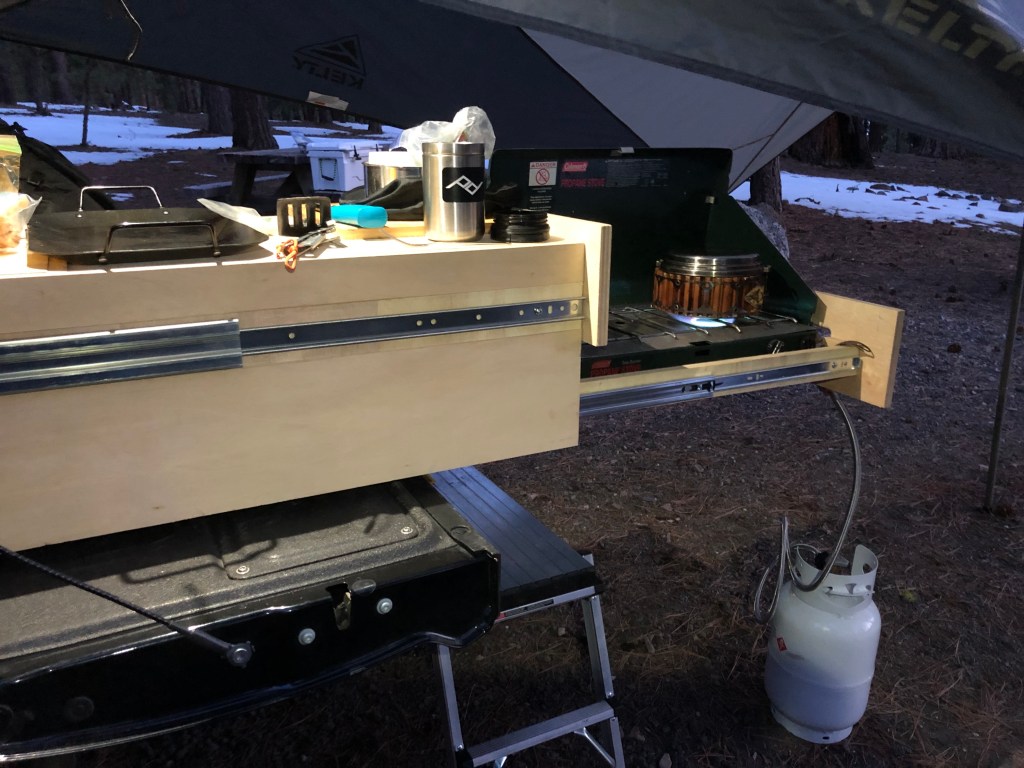
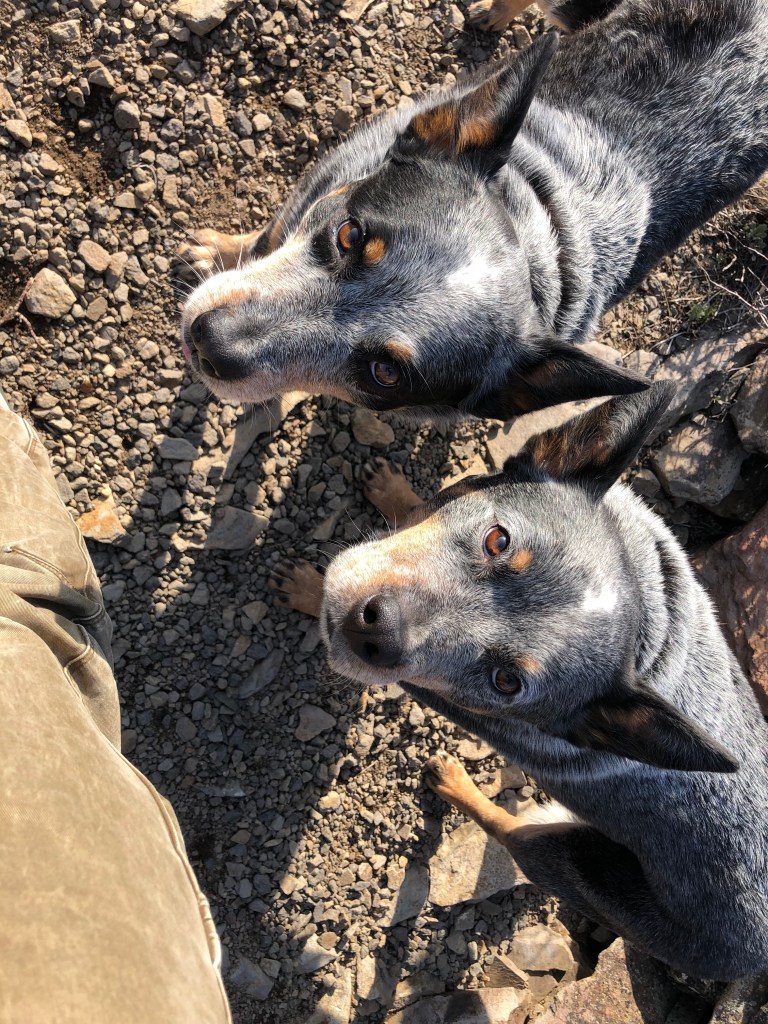
The campground has about 6 car camping sites with another handful of walk-in tent sites scattered in the forest. With the observatory closed in early season, I had the entire place to myself. The dogs ran around chasing chipmunks and playing in the snow while I got camp set up.
Nighttime lows were below 30 degrees and we suffered overnight. I slept with a hot water nalgene in my sleeping bag and the dogs got as close as they could and we all tried to stay warm. At 1:30am I heard scratching under the truck and realized I left the cashew/pumpkin seed clusters that I was eating in the car in the front seat. I’m pretty sure it was the chipmunks trying to climb up through the engine into the cab to get some snacks. I got out of my bag and put all the foot in the cooler and sealed everything up.
Overall a good first trip to central Oregon to explore. More to come.