Product Design, Leadership, Mountains

Chris Rivard

Month: November 2018

Design Ops

As the product team continues to scale at Cloudability, we’ve begun taking a more deliberate approach to how we work as a design team and how our operation and efficiency scales. Part of that process has been updating our tools. We’re using Abstract for design version control in Sketch and the rapid build-out of our design system.  Abstract allows us to include Shared Libraries when we begin to design a new feature – effectively pulling in the Design System to every project. There are still issues that I see on the horizon including overall governance of the system as the team grows. It feels very much like a situation where we’ll need to move slower in order to maintain long term velocity and avoid accruing design debt.

A couple of resources that I’ve found helpful are the Smashing Magazine published book Design Systems by Alla Kholmatova and the very detailed YouTube walkthrough of building out a design system by Christopher Deane

A specific issue I’m keeping top of mind is balancing vertical rhythm and information density. Our product is data intensive and much of the presentation is either a data visualization or a data table. 

Another tool we’re using is Catalog.style with the long term goal of consolidating React components in the design system to make the communication between front-end engineering and product design simpler.  I’m not yet sure how we’ll represent the design system that we need for day to day design work and the larger Catalog design system. I’m not quite there yet.

We’ve been working rapidly at both component inventory, progressing on the design system in Sketch (very tedious and onerous at times) and standing up Catalog in a github repo and working through the configuration and theming (very basic but sufficient for our needs). 

I’d love to hear any insight other designers may have about tools you’ve found successful and more particularly about governance models for design systems. I anticipate when deadlines pick up one of the first things to go out the window will be updating shared styles and symbols in the design system. HMU if any designers want to talk shop. 

Sankalpa

Sankalpa (Sanskrit: संकल्प) means an intention formed by the heart and mind — a solemn vow, determination, or will.[1] In practical terms a Sankalpa means a one-pointed resolve to focus both psychologically and philosophically on a specific goal. A sankalpa is a tool meant to harness the will, and to focus and harmonize mind and body.

I’ve been using the Insight Timer app to close out the day and prepare for a good night’s sleep and one of the guided meditations has an instruction that I really, really like:

“Set your sankalpa. Ask yourself,  in your life right now what is your deepest most heartfelt desire. Think of your sankalpa as a little seed you’re planting into your time in the world of sleep. State your sankalpa 3 times aloud, give thanks, and then let it go”.

I also love the concept of “being breathed”, I’ve never considered a distinction between my inhalation and exhalation and “being breathed” by something larger.

It’s Yoga Nindra for Sleep by Jennifer Piercy and it’s great. I tried to listen to it on my run earlier in the week and it didn’t quite work. 

Mr. Consistency

I’ve written before about ‘practicing my running’ and I’ve long subscribed to the idea that increased mileage leads to better efficiency and speed. But after reading Peak, my thinking is changing a bit. The book focuses on ‘deliberate practice’. It’s being more deliberate what you’re trying to learn, improve, train for – not mindlessly doing the same thing over and over.

The book is written by the scientists who did the study that led to Malcolm Gladwell’s book Outliers. This is the original source study though. In that book Gladwell focused on the 10,000 hour rule: meaning that it takes someone about 10k hours to become expert in something (musical instrument, athletics, whatever). It’s really about 7400 hours, but 10 sounds better. 

So back to running. This year I’ll close out just under 1200 miles, with about 150,000 of vertical. The mileage is a little bit less than last year, vertical is about the same. There were only a few week out of 52 that I ran under 20 miles per week, between 20 and 30 was the most common with a few weeks above 30. I don’t think I had any weeks above 40.

I’ve been happy and thinking that 2018 has been all about consistency and balance. I never got sick in 2018 and I never felt like I couldn’t recover from that mileage. I also had a few streaks of lifting over the year. Climbing objectives were chosen wisely. I skied the pow days, got up a couple of volcanoes and climbed Rainier in July in an ‘almost’ single push (we stopped at Camp Muir and ate and napped for a couple of hours).

Always the optimist, I’m looking forward to 2019. As the holiday season arrives I’m starting to think about ** oh I forgot I rode my bike from my house to Mt Hood, climbed (*didn’t summit), then skied out and rode my bike home. The most memorable moment of that trip was passing time at Illumination Rock waiting for the snow to soften so we could ski out with a woman who climbed up to spread her husband’s ashes. She cried. I cried. When you say to someone, “what a beautiful day it is…”, remember that everyone is in a different place, but it doesn’t make the moment any less beautiful.

So yah so I’m starting the goal planning for 2019. My crampons are sharp, ice tools too… Took the year like a bandit. I’m a motherfu**in’ Starboy.

spotify:track:7MXVkk9YMctZqd1Srtv4MB

Reading

A few articles I’m reading this week.

Yes!

In the celebrating wins category, a colleague recently paid me a huge compliment. I won’t go into the specifics, but it was something I devoted a lot of time and effort to making sure met with success.

Ideas are cheap, execution is everything. 

Chris Sacca

This was a big system problem with a lot of detail and a lot of things that could have gone sideways. Something that impacted a lot of people. From concept to design to execution to communication, I worried the details.

He said that he felt like he was arriving into a city on a flight and I was the pilot, explaining that the plane was x miles out; relaying the temperature and forecast.  Tray tables up, seat belts fastened, seats upright. Attendants take your seats. Smooth landing. Thanks for flying with Chris Airlines.

Yes! Sometimes things go right.

Some nights I stay up cashing in my bad luck, some nights I call it a draw. Some nights I wish that my lips could build a castle, some nights I wish they’d just fall off.

fun.

Chekhov

[when he speaks] flies die of boredom.

The thing about Chekhov is that the insight or turn of phrase always catches one off guard. I was reading A Boring Story and it paces along nicely – not so much in classic prose style… but excellent pacing. The details of place names or character references aren’t so important to the story, but it’s the succinct capturing of human nature. It’s timeless. It’s easy to map the traits of his characters to people you’ve met.

The Hunstman is another good one. Checkhov frames out the characters and sketches just enough of their relationship to let the reader complete the story. Maybe that’s a quality of good fiction – it’s not so much of a complete, high fidelity account of every detail, but just enough to let the reader close the loop. It’s the blank space, what isn’t written that captures the reader’s imagination.

I’ve been reading Checkhov’s short stories in between pop science business books and nonfiction. It’s been nice to return to a well written short story.

Low-4

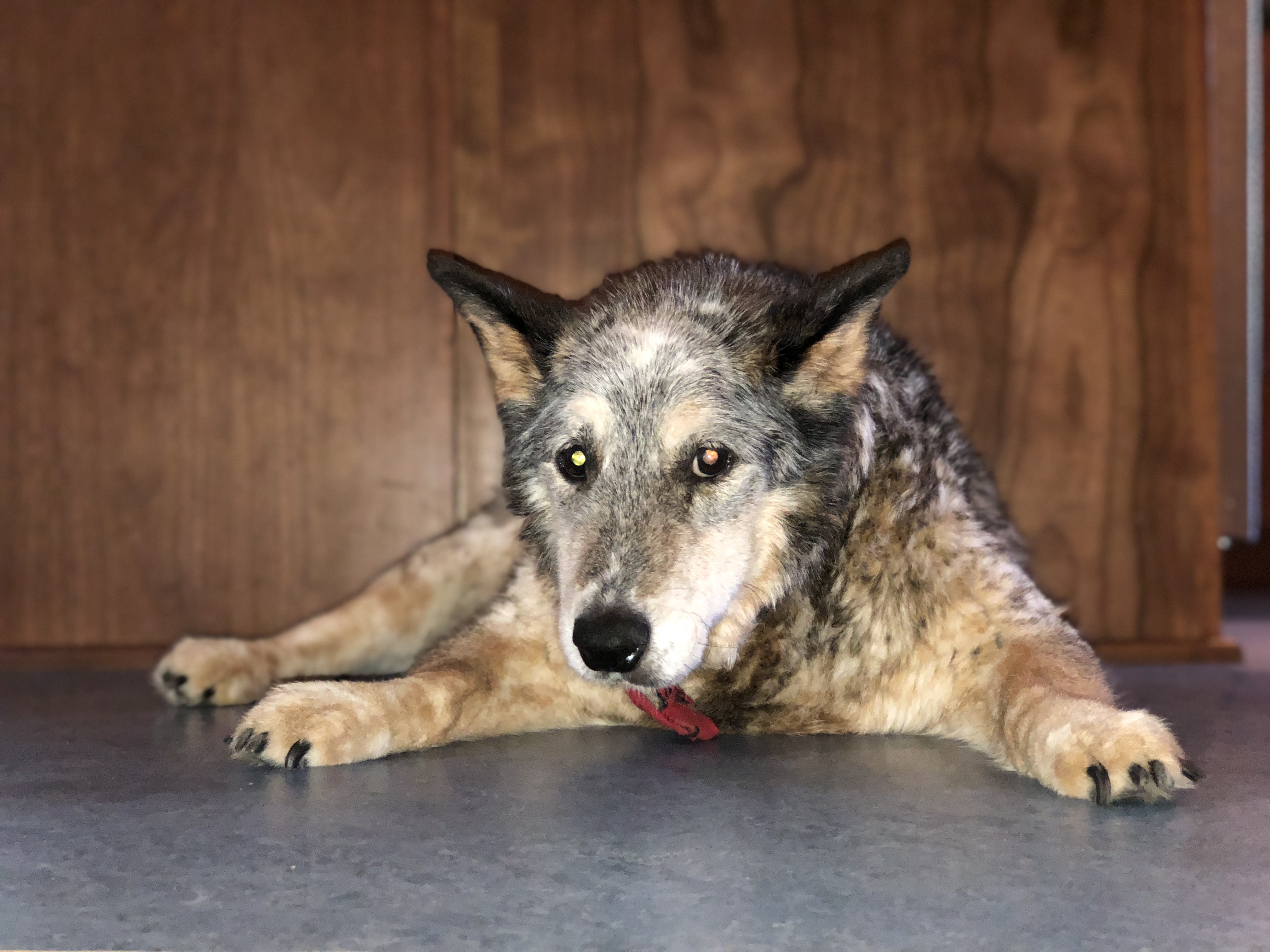
Alec gave him the nickname when we were hiking out of Chicago Basin in the Needles range, Colorado. His real name is Wonka. He and Granite Chief aka Chiefy, hiked with us from Purgatory Ski Resort just outside of Durango back into the range. We were headed back up to climb Mount Eolus and Sunlight Peak, one 14’er we climbed a couple of years earlier, one we hadn’t.

To understand how Wonka earned the nickname, it’s important to learn his personality. We adopted Wonka from Watermelon Mountain Ranch in Albuquerque. First he was a res dog. In New Mexico there are a lot of Native American reservations and on those reservations, there are dogs neither spayed nor neutered. The litters are large. Many of them are killed on the highways, some make it out to the shelters. Wonka was lucky. He was adopted by a family living in an apartment, where he then proceeded to bite one of the children and went back out for adoption. Then he joined our pack. 

He’s deaf. It’s common in Australian Cattle Dogs. He has a gunsight notch at the tip of his right ear that Chief gave to him when they were competing for daddy lap time. His tail was cropped as a puppy, too short. He’s sensitive where his tail is cropped and would prefer not to have anyone pet or scratch that area. Wonka will always choose a hard floor to a dog bed, he eats every meal as if it will be his last, he takes pleasure in the simple things.

Living with a deaf dog, you grow to understand their needs – staying in visual proximity, waving them over – making sure they know you’re nearby by stomping the floor to send a vibration they can feel. As a deaf herding dog, Wonka has adapted the ways he keeps track of us. He’ll lay across all entries/exits in order to ensure we have to move through him to leave a room. He’ll then get up and reposition himself to achieve the best vantage point.

Wonka is my wing man. We spend a lot of time together, in the evenings. I read with one hand and scratch his head with the other. He’s always got eyes on me. And I’ve always got his back. 

Low-4. Hiking out through the blowdowns and across scree slopes Wonka had one speed. On that trip he didn’t stop, 19 miles we powered on. Toward the end of the hike I relieved he and Chief of the packs holding their dog food and treats they were carrying. At my heels Wonka will follow me anywhere. 

Meditations

Some of my favorites from Marcus Aurelius’s Meditations (Gregory Hays translation).

At dawn, when you have trouble getting out of bed, tell yourself: “I have to go to work—as a human being. What do I have to complain of, if I’m going to do what I was born for—the things I was brought into the world to do? Or is this what I was created for? To huddle under the blankets and stay warm?” —But it’s nicer here.… So you were born to feel “nice”? Instead of doing things and experiencing them? Don’t you see the plants, the birds, the ants and spiders and bees going about their individual tasks, putting the world in order, as best they can? And you’re not willing to do your job as a human being? Why aren’t you running to do what your nature demands?

Not to feel exasperated, or defeated, or despondent because your days aren’t packed with wise and moral actions. But to get back up when you fail, to celebrate behaving like a human—however imperfectly—and fully embrace the pursuit that you’ve embarked

To watch the courses of the stars as if you revolved with them. To keep constantly in mind how the elements alter into one another. Thoughts like this wash off the mud of life below.

Everything that happens is either endurable or not. If it’s endurable, then endure it. Stop complaining. If it’s unendurable … then stop complaining. Your destruction will mean its end as well. Just remember: you can endure anything your mind can make endurable, by treating it as in your interest to do so. In your interest, or in your nature.

The Pythagoreans tell us to look at the stars at daybreak. To remind ourselves how they complete the tasks assigned them—always the same tasks, the same way. And their order, purity, nakedness. Stars wear no concealment.

It’s quite possible to be a good man without anyone realizing it. Remember that.

Warm start

I’ve been burning through my book list trying to bring it home toward the end of the year. I’ll post the big(er) list in early 2019. So far at the top of my list for fiction is Kakfa On The Shore by Murakami. His writing speaks to me in a deep way.

Sometimes fate is like a small sandstorm that keeps changing directions. You change direction but the sandstorm chases you. You turn again, but the storm adjusts. Over and over you play this out, like some ominous dance with death just before dawn. Why? Because this storm isn’t something that blew in from far away, something that has nothing to do with you. This storm is you. Something inside of you. So all you can do is give in to it, step right inside the storm, closing your eyes and plugging up your ears so the sand doesn’t get in, and walk through it, step by step. There’s no sun there, no moon, no direction, no sense of time. Just fine white sand swirling up into the sky like pulverized bones. That’s the kind of sandstorm you need to imagine.

Nonfiction so far has been Marty Cagan’s Inspired (2nd edition). Good product discovery strategy.


Powered by WordPress & Theme by Anders Norén