Product Design, Leadership, Mountains

Chris Rivard

Month: March 2017

McDonald’s

Burned through Hillbilly Elegy in a few days.  I thought he did a great job of making the time period relatively abstract and focused more on the demographic, cultural and social implications of growing up in Kentucky/Ohio. There were few period references – the war in Iraq (I’m assuming the second one, not the first). Just a few pop culture references.

The thing that struck me was how much I related to some of his stories. Not so much the family dysfunction (some of that) but mostly just what it’s like to grow up poor. I remember my dad taking me to McDonald’s for my birthday -which was a huge deal. The kind of food that my family ate growing up (not super healthy). Just generally the class distinctions between rich and poor.

My dad was enlisted military, there were 4 kids in my family – there was never any money for anything. We went to church every Sunday and the special treat after church was getting donuts. Being a military brat, we lived on base in military housing until I was in middle school. Shopping was done at the commissary and the PX (post exchange). One of the extraordinary things that I realized later in life was how diverse my schoolmates were – enlisted families were mostly poor families: black, hispanic, asian, white. The common denominator was that our parents all worked for the same “company”. Without the structure of sports teams I’m not sure what we would have done. I think I played every sport offered by the DYA (I’m guessing that stood for the department of youth activities).

After moving off of base housing at Fort Benning, Georgia (where the School of the Americas was based) my parents sent all of us to private Catholic school, where my mom also taught.  I remember having the discussion of whether or not I wanted to go to the Columbus, GA public high school or Catholic school and I pleaded with my parents to go to private school. I remember the times that tuition was late or my mom was worried that we didn’t have the money to pay.  I was the first in my family to go to college.. that’s essentially where I split from the family — I started college on a studio art scholarship and then transferred into the University of Maryland in College Park.

There is definitely an age – around middle school / high school, where kids need the support to make the leap to jump out of their class. For me it was the decision to go to private school and my parents acquiescence.

The book is a best seller because he nails what it’s like growing up in Appalachia. There is a bit of a mixed message about abdicating personal responsibility and viewing everything as hopeless and stacked against your versus taking responsibility and pulling yourself up by your bootstraps. In his case his mawmaw (grandmother) was the person to put him on the right path.

In the last few chapters of the book as he moves from undergrad to law school – it’s interesting to read about his realization of the distinction between poor and rich. The things about how the world really works in upper / upper-middle class families. I won’t give it away – but it’s definitely worth a read.

On the broader socioeconomic side of where the author is coming from – Chris Arnade is doing amazing ethnographic research on Twitter.


Presence

For some reason I thought Amy Cuddy had written another book and Presence was her blockbuster follow-up… but I think *this* is the book that captures all her research about power poses. First half of the book is a bit too anecdotal for me – I think it’s a pet peeve. Second half details the results of all the studies that support her research. Excellent.

Some notes:

Anxiety gets sticky and destructive when we start becoming anxious about being anxious. Paradoxically, anxiety also makes us more self-centered, since when we’re acutely anxious, we obsess over ourselves and what others think of us.

We like our distinctions to be clear—it’s a human bias. So we classify new acquaintances into types. Tiziana Casciaro, in her research into organizations, refers to these types as lovable fools or competent jerks.2 Occasionally we see people as incompetent and cold—foolish jerks—or as warm and competent—lovable stars. The latter is the golden quadrant, because receiving trust and respect from other people allows you to interact well and get things done.

I am issuing a challenge to all of us, and it’s one that I do not take lightly: Let’s change it. When you see your daughters, sisters, and female friends begin to collapse in on themselves, intervene. Show them examples of girls and women in triumphant postures, moving with a sense of power, speaking with authentic pride. Change the images and stereotypes that kids are exposed to. We don’t need to tell women to be like men. But we do need to encourage girls not to be afraid to express their personal power. Let’s stop thinking about powerful postures as masculine and powerless postures as feminine.

When we embody shame and powerlessness, we submit to the status quo, whatever that may be. We acquiesce to emotions, actions, and outcomes that we resent. We don’t share who we really are. And all this has real-life consequences.

The way you carry yourself is a source of personal power—the kind of power that is the key to presence. It’s the key that allows you to unlock yourself—your abilities, your creativity, your courage, and even your generosity. It doesn’t give you skills or talents you don’t have; it helps you to share the ones you do have. It doesn’t make you smarter or better informed; it makes you more resilient and open. It doesn’t change who you are; it allows you to be who you are.

… and too many more to post. It’s a great read. Here’s the original TED presentation from a few years ago. I’m surprised when I hear people haven’t seen it… so good.

For another quick and fun read into communication, The Secret Life of Pronouns by James Pennebaker.

https://embed.ted.com/talks/lang/en/amy_cuddy_your_body_language_shapes_who_you_are

How to Make Sense of Any Mess

If I would have known that this was a short ebook I would have read it years ago. It’s less than a 2 hour read.  My biggest takeaway was getting a concise list of terminology for diagram types. I know that sounds dumb but over the years I’ve created my own design artifacts that pull from many different types of diagrams and have various levels of fidelity. It works for me, but it’s tough to communicate it to someone else.

A few quotes from How to Make Sense of Any Mess from Abby Covert.

We can be insecure or secure about the language we’re expected to use. We all prefer security. Linguistic insecurity is the all too common fear that our language won’t conform to the standard or style of our context.

You can turn a space into a place by arranging it so people know what to do there. This act is called placemaking.

The jars, the jam, the price tags, and the shelf are the content. The detailed observations each person makes about these things are data. What each person encountering that shelf believes to be true about the empty spot is the information.

Meaning can get lost in subtle ways. It’s wrapped up in perception, so it’s also subjective. Most misunderstandings stem from mixed up meanings and miscommunication of messages.

The next information architecture book I’d like to read is Pervasive Information Architecture by Resmini and Rosati. Andrea spoke at EuroIA when I presented in Edinburgh. The other book on my list is The Poetics of Space… which I started and abandoned. It was dense and I wasn’t ready at the time – but I’ll be back for that one.

Thinking in Systems

4 from Thinking in Systems, A Primer

The first step in respecting language is keeping it as concrete, meaningful, and truthful as possible—part of the job of keeping information streams clear. The second step is to enlarge language to make it consistent with our enlarged understanding of systems.

Our culture, obsessed with numbers, has given us the idea that what we can measure is more important than what we can’t measure.

Be a quality detector. Be a walking, noisy Geiger counter that registers the presence or absence of quality.

If something is ugly, say so. If it is tacky, inappropriate, out of proportion, unsustainable, morally degrading, ecologically impoverishing, or humanly demeaning, don’t let it pass. Don’t be stopped by the “if you can’t define it and measure it, I don’t have to pay attention to it” ploy. No one can define or measure justice, democracy, security, freedom, truth, or love. No one can define or measure any value. But if no one speaks up for them, if systems aren’t designed to produce them, if we don’t speak about them and point toward their presence or absence, they will cease to exist.

A man, a plan, a canal – Panama!

[A palindrome in 3 parts]

SE Portland to Boring, OR and back. March 18, 2017.

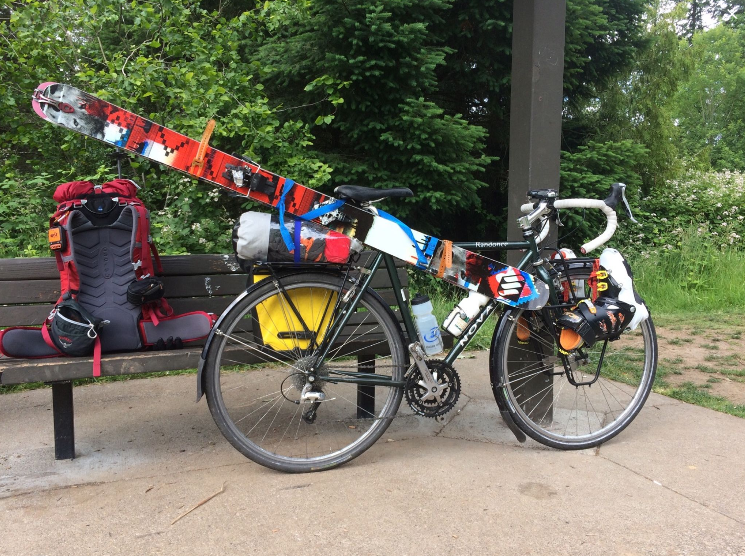
I rode out to the intersection of 212 and 26 today, mostly to get some miles in, but also to start prepping for my 2nd attempt at a human powered climb of Hood from Portland. The plan is to ride to Timberline, skin up to Hogsback, summit and then ski back to my bike (and ride back to Portland). Boom boom boom.

That was my plan last year. Lots of things went wrong, but the biggest was simply leaving too late in the afternoon. I was packing and repacking and left the house mid-afternoon with my skis on my pack (on my back) which proved unsustainable after 5 miles, so I had to stop and readjust – the first of 3 times trying to find a comfortable way to carry the skis on the bike for 64 miles (I only made it 56 miles before pulling the plug at the rest area in Government Camp).

SE Portland to Government Camp, by bike.

Things I’m thinking about this year:

  • Maybe have someone meet me at Timberline to help me get some food and warm up and mainly watch the bikes. I’m not sure I feel comfortable locking the bike up — and I don’t really want to carry a lock all the way up there anyway. Last year my plan was at arrive before sunset, cook some food, change and take a power nap before starting to climb – I never made it that far.
  • If I leave earlier in the morning and take the day to ride out, I can be more relaxed about a start time and getting some rest, recovering from the ride.
  • I don’t want a sag wagon or assistance, but maybe just someone to help out with transitions. TBD to carry bivy gear and a bag to sleep…. more weight == less likely to finish… the light and fast or margin of error debate. ¯_(ツ)_/¯
  • There was a lot of construction on 26 last year between Welches and Govy. All that construction is done and there’s a nice wide shoulder now. The only close call I had was after dark just before I got to the Ski Bowl parking lot – a big semi rolled by and the wind blast started to pull me left – I steered hard right and hit the guardrail and banged up my knee. That’s when I stopped and took stock of everything for a minute or two.

Too much stuff. I took my big belay parka to use as a bivy/sleeping bag and I had my jetboil to cook some hot food… but I never got to that point.

I was looking through my training log leading up to the attempt last year and I was only averaging about 40 miles of riding in the weeks leading up to the “BIG RIDE”. I’m taking some time from running right now and I’ve averaged about 100 miles a week for the last few weeks. I think I’ll be in much better cycling shape for this attempt.

In Bruce Chatwin’s book The Songlines, he writes about  Australian Aborigines singing their world into existence:

A knowledgeable person is able to navigate across the land by repeating the words of the song, which describe the location of landmarks, waterholes, and other natural phenomena. In some cases, the paths of the creator-beings are said to be evident from their marks, or petrosomatoglyphs, on the land, such as large depressions in the land which are said to be their footprints.

https://en.wikipedia.org/wiki/Songline

I just love the idea of human powered adventures. I’ve been thinking of a way to push the boundaries of what’s possible – and I’ve come up with a new twist.

Instead of heading home after climbing Hood, my plan is to hang a left on 26 to 35, ride down to Hood River, cross the bridge to White Salmon, and then ride out to Trout Lake and climb and ski Mt. Adams.  Then riding to St Helens to climb it and then riding back home again.

Cycling mileage looks something like:

  • 64 miles to Timberline
  • 90 miles to Mt Adams
  • 90 miles to St. Helens
  • 80 miles to home
    • ~325 miles?

So.. some logistical concerns that I’m mulling:

  • I’ll need bivy gear to sleep, this isn’t a one shot deal but a multi-day suffer-fest
  • I’ll need a lot of food, on the bike, climbing and dinner fuel
  • I’m leaning away from pulling a trailer – I think it would just kind of suck … but not out of the question yet. I need a better way to carry my skis.
  • How many days?
  • Where to bivy? There will be some recovery time at Timberline before climbing … so in the parking lot. Then maybe somewhere closer to Adams. Could be a big day of riding to get ready for Adams the next day.  Then somewhere on the way to St. Helens.. not sure – I can’t see this far ahead for this adventure.  The day between Adams and St Helens could be a real treat.
  • Getting across the bridge to White Salmon – bikes aren’t allowed on the bridge, but I’ve heard you can get a shuttle.. or have someone transport me over the bridge.
  • When is the road to Morrison Creek going to be snow free enough to ride it to the Adams trailhead? Route timing in general.
  • That’s it for now…

Why do anything really? In this case.. because it makes me happy.

[spotify id=”spotify%3Atrack%3A5eCkuGPZNl4mISFNPgr3Dd” width=”300″ height=”380″ /]

Irony, Sarcasm and Machines

I’ve been taking the long commute on my bike the last couple of weeks as I take a short break from running. I’m riding further East toward the freeways and then taking the commuter/walking path in a big loop back to the Willamette River and into downtown. It’s about 17 miles, mostly flat and fast if you want to drop the hammer (when you’re a hammer, everything is a nail – an adage I thought of as I was trying to maintain 20mph + on my commute and sweating profusely in a driving rain).

There has been a lot of controversy about the homeless in Portland and recently (last Fall) there was a effort by the city to break up homeless camps along the Springwater corridor.

Well… it turns out most of those structures decamped East onto the 205 path where they’re now firmly established between the path and freeway boundary wall.  On the West side of the 205 path is a neighborhood, and in one of those neighborhoods is a front yard garden….errr, the kind of garden created with “found objects”. The objects in this case are bicycle wheels (sans tires), sheet metal formed into flowers 5 feet in diameter, pots of dead flowers, and an excavated (and empty) koi pond all of which is surrounded by a 4 foot tall chain link fence.

The pièce de résistance of this garden is a spray painted white bicycle frame, fork and handlebar situated in the center of the yard.

I’ve stopped twice on different days to take pictures with my phone of this garden, but when looking at them when I get into the office, they just don’t seem that interesting. The bicycle frame, fork and handlebars with the tireless wheels mounted on the bird bath is my favorite piece and yet when I snap it – I inadvertently get the late 90’s Honda parked in the driveway – and it immediately looks less than artistic.

And the idea that I can’t seem to shake is that my interpretation of this found object garden and the artistic merits of the bicycle frame, fork and handlebar will in no way be distinguished from Pablo Picasso’s Bull’s Head. Though the artist’s intent was the same, one is a junk garden and one is “astonishingly complete” metamorphosis.  Furthermore,  these two pieces of found object art will be indistinguishable in importance by a neural net.

The same way that a child cannot yet process irony or sarcasm, a deep learning algorithm will not be able to make nuanced interpretations of art.

As I slid my phone back into my pocket, heaved my backpack onto my shoulders and clipped into my pedals, I had the distinct feeling that our future robot utopia is going to be decidedly less… fun.


The Clean Slate Club

This book has been sitting on my shelf for about 10 years. I finally decided to pick it up and read it. The Shock Doctrine by Naomi Klein.

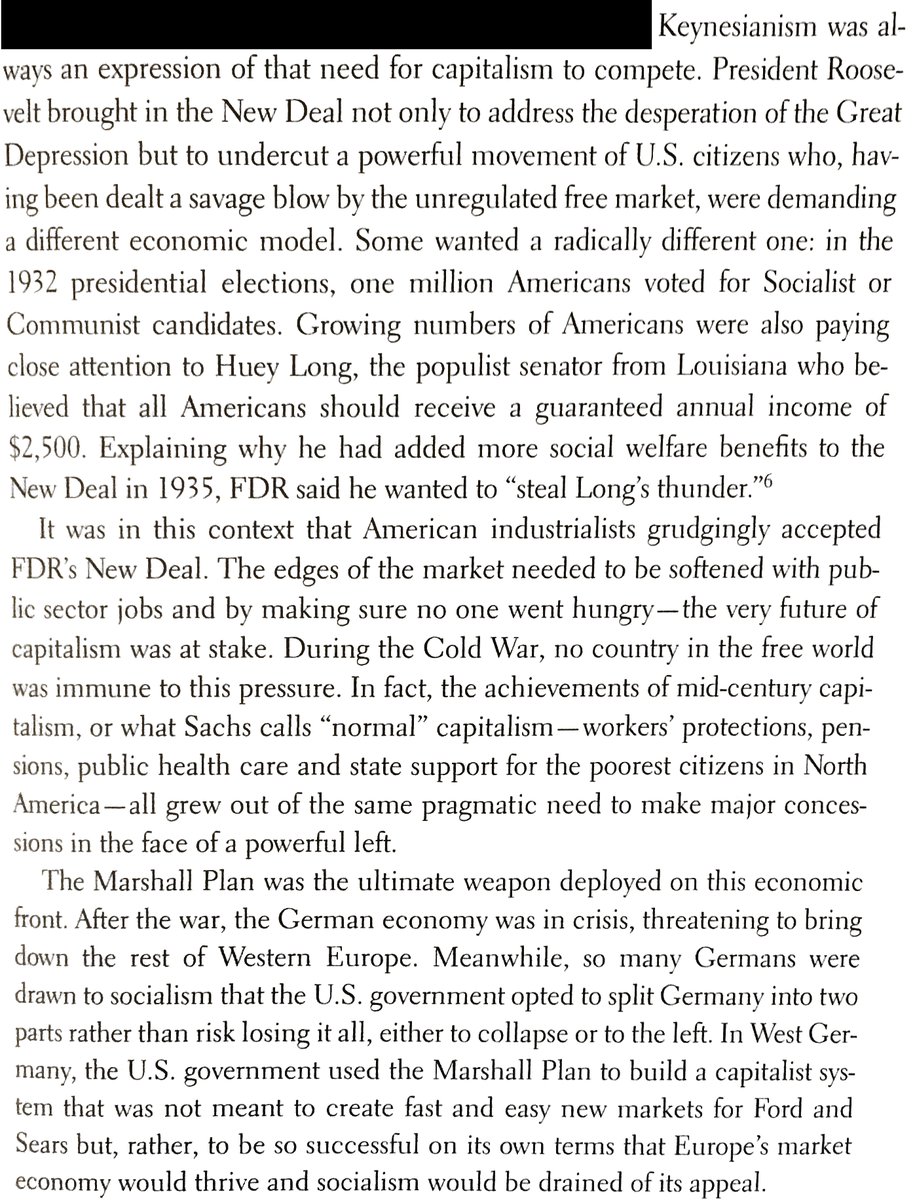
Beginning in the 1970’s in Latin America, Neoliberals from the Chicago School of Economics, following the ideology of Milton Friedman and Friedrich Hayek began to influence (experiment with) the economies of countries in the Southern Cone. Chile, Argentina, Brazil, Bolivia.

The three pillars of Friedman’s Neoliberalism:

  1. Privatization: Open up all state owned businesses to multinational corporations
  2. Deregulation: Remove laws that protect the state from multinationals operating within the country
  3. Free Trade: No laws to impinge upon quotas, imports or exports

These concepts are in stark contrast to developmentalism and the ideas of John Maynard Keynes. Keynesian economic theory is best captured in the policy of The New Deal under Roosevelt (in the U.S.). And more recently in the government spending that brought the country back from the Great Recession in 2009-2009. The government is spending capital to build social programs and spur economic growth. It worked during the New Deal and it worked under the Obama administration.

Klein’s premise is that free market capitalism based on Neoliberalism is incompatible with democracy. It is based on the concept of a clean slate – in the context of a nation state, it means that the existing economy and political landscape is wiped clean and new economic policies are introduced. Historically these policies need to be backed up with force – thus the dictatorships in Latin America.

Her theory is that the introduction of these free market policies are best introduced following a shock to the culture where the population is disoriented – and neoliberal policies are instituted upon an unwilling (and uninformed) population. (Remember Shock and Awe in Iraq?). The idea is that the existing order is completely disoriented. Order being the existing political body, the economy, the general population.

She begins the exploration of the parallels between shock therapy on an individual scale with the experiments in the 1960’s in Montreal (funded by the CIA to counter the belief that Cold War spies were being brainwashed). These experiences were effectively torture experiments to determine if a person could be psychologically wiped clean and regress to a infantile state where they can be easily influenced. The output of these experiments led to the creation of the Kubark manual of interrogation. This sound hugely conspiratorial – but Klein does a great job through most of the book in weaving a coherent narrative from the repressive dictatorships of Latin America (Pinochet in Chile) to the fall of the Soviet Union to apartheid in South Africa and the debacle of the United States occupation and failed reconstruction in Iraq.

Neoliberals have been trying to roll back social programs b/c they feel they’re … socialist. There has been a conflation of “freedom” with “free market capitalism”. Free market capitalism is not equally distributed across a population.
laizzez-faire, free market capitalism benefits those in power and leads to vast differences between rich and poor (we’re seeing this in the US right now). The economy of Sweden is the antithesis. Open democracy, capitalism balanced with social programs. This is what’s know as “the middle way”.
the multinational overlap in neoliberalism is a resource grab. All operations of the state should be privatized, multinationals come in and export profits out of the country. Interestingly, Russia did not do this and thus the oligarchs were established after the collapse of the Soviet Union.
The war in Iraq was an abject failure of neoliberal policies, yet no one was held responsible for destroying the country. (I could go deep into the irony of the current administration blaming the former administration to spawning ISIS, but I’ll stop. The destruction of Iraq was primarily an economic failure – that led to a political failure, that led to where we are now.
Economics are directly tied to political changes – they go hand in hand
Many developing countries are wising up to the IMF and World Bank. They are effectively lending mass sums of money to countries in exchange for opening up their markets to deregulation and privatization.
There’s a lot more to the book that what I’ve noted. I found the historical context of the US’s involvement in Latin America fascinating. It also allowed me (in reading the book 10 years later) to form a cohesive timeline of how neoliberalism contributed to the current situation in the middle east. There’s a great chapter toward the end of the book about the homeland security industry and the Israeli technology sector.

Information Pollution

I heard the phrase “information pollution” from Evgeny Morozov the other day and I think it perfectly captures what I’ve been thinking as I try to allocate more time to read and write and think during the day. It’s a grasping at the ability to have a cohesive thought, to formulate a thesis and make a case for an idea without being sidetracked and having my attention hijacked.

It fits with the concept of choice architecture and the behavioral underpinnings of an internet supported by advertising.

It’s the long tail, the power law, the Pareto distribution of garbage information to valuable information. Most of what is online, in the explosion of online “news”and social media is of “low value” and doesn’t contribute to a deeper understanding of any complex topic and primarily serves as a distraction to the exercise of thinking deeply about a specific topic.

It’s become more apparent to me as I try to save articles to read in the future (when I have time)  and also move deliberately through my book reading list. I’ve been more critical about what I’m spending time reading and I’m finding that articles that initially look interesting are in fact comprised of low value information.

I’ll try to write something longer after I think about this a bit more, but there’s something at the intersection of choice architecture, attentional focus and distraction.

This is great and well worth it (podcast): https://www.farnamstreetblog.com/2017/02/naval-ravikant-reading-decision-making/

Powered by WordPress & Theme by Anders Norén