I don’t think I’ll be able to sustain this, but January was a decent month vert-wise. It’s a combo of cycling, running, climbing… but still.

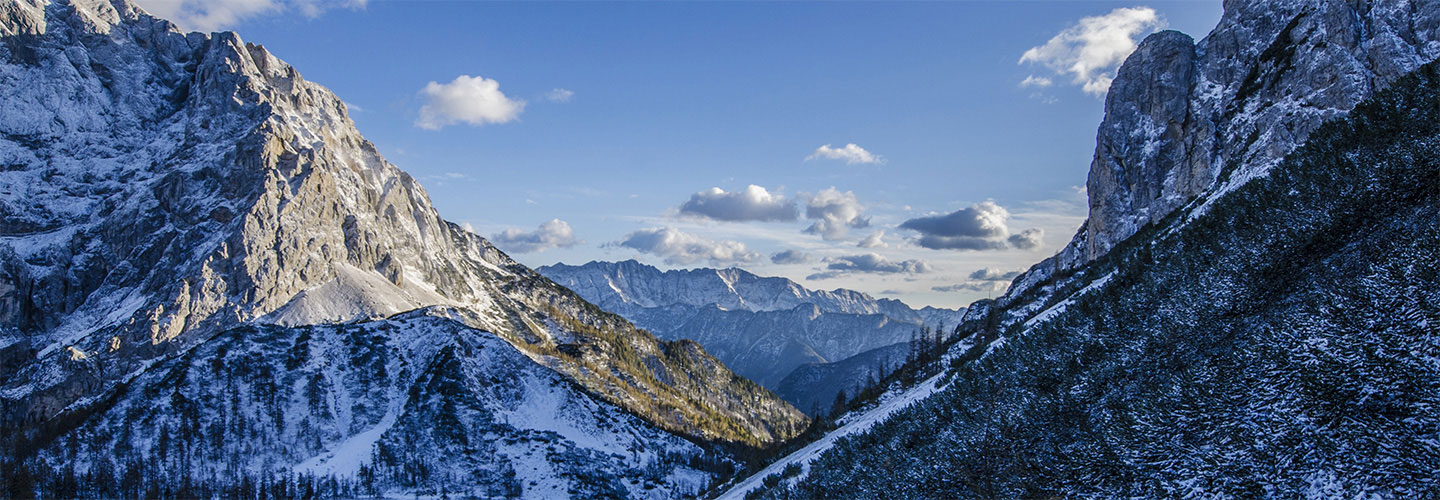
I don’t think I’ll be able to sustain this, but January was a decent month vert-wise. It’s a combo of cycling, running, climbing… but still.
From the LA Review of Books, excellent read.
A few excerpts:
He pointed to the evolution of the very word “technology” from the 19th to the mid-20th century as particularly revealing in this regard; he argued that the meaning of the word had morphed from “something relatively precise, limited and unimportant to something vague, expansive and highly significant,” laden with both utopic and dystopic import. The word had become “amorphous in the extreme,” a site of semantic confusion — surely a sign, he concluded, that the languages of ordinary life as well as those of the social sciences had “[failed] to keep pace with the reality that needs to be discussed.”
YES! this:
He’s onto something fundamental that’s worth exploring further: scientific knowledge and machines are never just neutral instruments. They embody, express, and naturalize specific cultures — and shape how we live according to the assumptions and priorities of those cultures.
There is another important reason why the algorithm-as-doer is misleading: it conceals the design process of the algorithm, and therefore the human intentions and material conditions that shaped it.
The algorithms considered in these discussions usually use datasets to produce classifications. Burrell’s “opacity” refers to the fact that an output of this sort rarely includes a concrete sense of the original dataset, or of how a given classification was crafted. Opacity can be the outcome of a deliberate choice to hide information.
Link:
I’ve been keeping my book list in Evernote – when I come across something interesting, I add it to the big list. I took a sizable chunk out of the big list toward the end of 2016. Not sure what I was doing in the first half of the year – running a lot I think. Here are some of the notables along with a short snippet. After skimming this list, if you have any recommendations – hit me up.
Life is short. Remind yourself of that constantly… I read more T.S. Eliot after reading this book. I think what really hit home was that dying is a part of living… and something we’ll all face. A tough read given that you know the outcome. But that’s the same as life, right?
What we call the beginning is often the end. And to make an end is to make a beginning. The end is where we start from. – T.S. Eliot
The things you think are important… turn out to not really be important.
Midwestern family dysfunction at it’s finest. I have a soft spot for the characters most like Franzen. Chip Lambert in this case. And of course Aslan. Heh.
Julian Assange psycho-thriller. Really liked reading about Berlin in the 80’s. Entertaining read. I was on kind of on a Franzen bender… but I stopped. I was searching for more postmodern American Lit – looking for more David Foster Wallace in fact, but that’s never going to happen so I might as well just re-read Infinite Jest :/
I think I may have read this in 2015, but it has stuck with me. I think it’s in my list of top 3… or 5 (ever). Amazing. Highly recommended. Read it.
2 words. Cary Grant. I had no idea Ian Fleming modeled James Bond after Cary Grant. Went back and watched Bringing up Baby. A bit repetitive, but I needed it.
Excellent book. Well written, travelogue, life journey. I’ve been recommending this one to friends. #cantstopwontstop.
I thought I was going to be underwhelmed, but Kelly Cordes wrote a well-researched, highly entertaining book about climbing in Patagonia. Some history, some mystery. Fun read.
I read this for work. Not so good. It’s like design process packaged up for MBAs. *sorry*. It covers Jobs to be Done and the key takeaway is… do more qualitative research.
Currently reading …and pausing. Initially thumbs up, but it’s a bit of a downer to realize how easily we can be influenced – and how addicted to my phone I am. A little bit of overlap with Kahneman and Tversky (just a little). May power through it or bail.
The oldest swim memory I have is of hiding in the locker room to avoid getting in the water because it was just so damn cold. That would have been about 1983 in Berlin, Germany and the team was the Berlin Bear-a-Cudas. These weren’t swim lessons, this was the team and we were racing.
The wall was up between East and West. When we traveled to swim meets in Munich or Stuttgart or to SHAPE in Belgium (Supreme Headquarters Allied Powers Europe), we passed through the checkpoints at night. I remember being woken up by the train slowing and stopping just after lights out so that our passports could be checked and then drifting off to sleep again when the train started only to be awoken again in the morning by the attendant calling, “coffee, tea, coca-cola!” pushing the cart down the corridor bottles rattling.
I swam continuously until I started college. My talents left me short of Division I scholarships, but within the grasp of Division II. I didn’t see myself swimming at a Division II school somewhere in the Florida swamplands and so I made other plans.
I swam at the pool in Cole Field House at the University of Maryland, joining some of the masters workouts. And then in the newly constructed natatorium while I was matriculating. This was the mid-90’s when triathlon was coming into it’s own as a sport. I was already doing a lot of cycling – both road and mountain, and working at the bike shop (College Park Bikes) and beginning to run a little bit (very little). A few triathlons followed… though no Ironman.
Fast forward to 2007. I trained at the Jewish Community Center in Albuquerque for the Waikiki Roughwater Swim in Hawaii. Imagine an outdoor pool in the desert at 5000 ft. elevation with the 10,6K Sandia Mountains as a backdrop. Decent. My brother and I swam the Roughwater in 2008. I’ve never felt so close to and part of the planet as during that race. When you’re swimming far out in the Pacific, you’re really in it.
There has been a lot of running in the intermediary years but not much swimming. I’ve hopped in the pool maybe once a year, or every other year and done a few laps.
That brings me to today.
The past two weeks while the girls have been in their swim lessons I’ve gotten in the pool. There aren’t any “legal” swim lanes open, so it goes something like this:
I have my suit on under my jeans and sit for a few minutes with the other parents. The lifeguards come over and take a couple of lane lines out, doubling one up for the water aerobics class starting on the south side of the pool. This leaves one open lane. Once all the classes are in progress, I strip down to my suit, grab my water bottle, goggles and cap and walk to the far end of the pool (opposite the lifeguards) like I own the place. Then I hop in and swim continuously until the girls’ lessons are finished. I have about 20 solid minutes and have been getting in a little over a 1,000 yards. At that is why I named the activity “Bandit Laps“.
Feels good to be back in the water.
[youtube https://www.youtube.com/watch?v=vmDDOFXSgAs]
[Overall it’s been a pretty terrible news (month?). I decided to write a little to take my mind off things. The subtext of all this is that walls are a terrible idea. And Fascists always lose in the end. tl;dr – If you want to read some deep analytical writing on where the world is… this is one I’ve been coming back to.]
This is from September 2016. Newly found, recently published.
I was having a conversation with my daughter about time in the car driving back from a hike at Mt. Hood recently. She was asking how long it was going to take to get home, “you said 15 minutes … 15 minutes ago”. I told her that sometimes time feels slow and sometimes time feels fast.
When I was running the day prior on the Pacific Crest Trail back to Frog Lake from Timothy Lake I was closing in on mile 30 or 34 (my watch was misbehaving) and I was trying to estimate time-to-car and time to a cold drink and the sliced watermelon that I had in the cooler waiting for me. The trail seemed to just keep going.
There was an aspect of expectation (I’m close to eating watermelon), and the unknown of distance remaining to get to the watermelon. I was running hard, driving and pressing as one does when the finish is close… and time stretched. So much that I looked across the tree line and thought I saw the road. There was no road. I stopped briefly, my heart pounding, and strained my ears in the direction of the the road. Just the wind, and then silence. Just once I second-guessed direction and distance and considered that maybe I had taken the wrong trail, maybe I would never reach the road; that maybe I’m another 30 miles to the next road. I reached my hand back to lift the underside of my hydration bladder, took stock of my remaining rice cakes and concluded that yes, I could run another 30 miles to reach a different road.
In 2 weeks I’m running Mountain Lakes 100, my first 100 mile ultramarathon. My taper has started and I’m beginning to reduce my weekly mileage from a high of 70 miles and a very deliberate periodization schedule of increasing mileage and intensity.
As I walked around downtown Portland eating a burritto as I power-walked, I concluded that training for an ultramarathon is like having a second job. I also concluded that I’m ready. I’ve worked hard, I’m as fit as I’ve ever been. I’ve been waking most mornings not sore or tired from the previous day’s workout, but feeling relaxed and rested.
This is the plan that I followed:

And this is the reality of how those workouts fit into the bigger plan:
 As the day gets closer and my recovery times hover near 0 hours (from upwards of 90 hours following my hard workouts), I’m keeping in mind to simply trust the time I’ve put in – the hours on the trails, the lunchtimes spent in the gym lifting, foam rolling instead of eating dessert.
I’m beginning to get into the mental state necessary to run 100 miles. I’m thinking about the words sanguine and sisu. I’m thinking about The Art of War and the 9 situations: specifically #9 – Desperate Ground and creating a situation where you put yourself on desperate ground. Deliberately.
I’m looking forward to going to that place where you just dig and dig. I’m thinking about sitting with the pain… and then letting it go. Forcing a smile to reset. And I feel gratitude that I’m able to attempt this effort.
Do not burn yourself out. Be as I am-a reluctant enthusiast… a part time crusader, a half-hearted fanatic. Save the other half of yourselves and your lives for pleasure and adventure. It is not enough to fight for the land; it is even more important to enjoy it. While you can. While it is still there. So get out there and mess around with your friends, ramble out yonder and explore the forests, encounter the grizz, climb the mountains. Run the rivers, breathe deep of that yet sweet and lucid air, sit quietly for a while and contemplate the precious stillness, that lovely, mysterious and awesome space. Enjoy yourselves, keep your brain in your head and your head firmly attached to your body, the body active and alive, and I promise you this much: I promise you this one sweet victory over our enemies, over those deskbound people with their hearts in a safe deposit box and their eyes hypnotized by desk calculators. I promise you this: you will outlive the bastards
– Edward Abbey
Powered by WordPress & Theme by Anders Norén